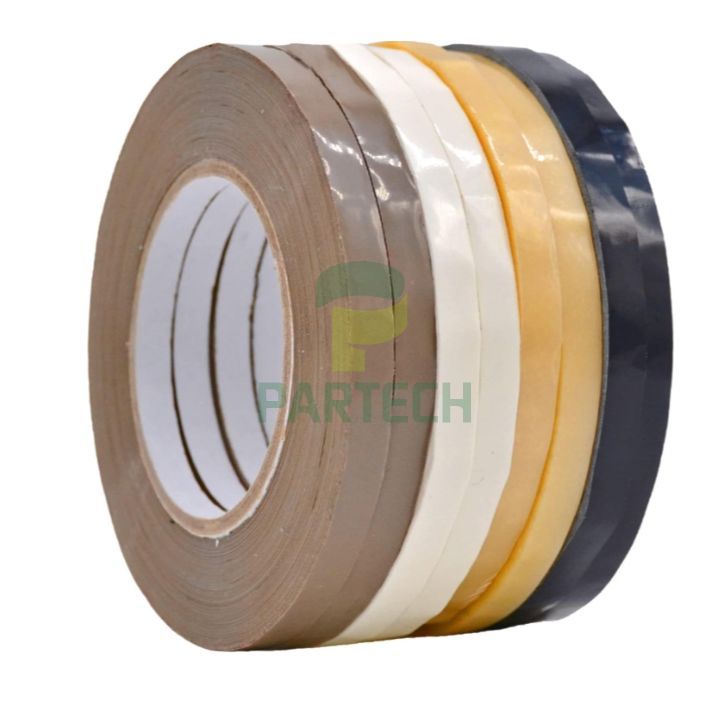

Colored washi tape is commonly used for marking and masking applications. Although beige and tan (earth-toned) varieties are the most common, many people mistakenly believe that the color comes from the tape's backing material (the "film"). In reality, the color comes from the adhesive itself. Washi tape is available in a wide range of colors, while its backing is primarily made from washi, a traditional Japanese-style paper.
When evaluating washi tape quality, buyers should pay attention to the adhesive consistency, color performance and overall surface appearance. The following three factors can help distinguish high-quality washi tape from products containing lower-grade adhesive materials.
Observe how the adhesive stretches and spreads. High-quality adhesive should form a smooth, continuous layer. If it stretches unevenly or pulls away in distinct, separated dots rather than maintaining a consistent coating, this may indicate a significant amount of impurities in the adhesive.
When applied to a surface, higher-quality washi tape generally provides better opacity and masking capability, which correlates with a thicker adhesive layer. When comparing different rolls, high-quality tape with a generous, pure adhesive coating will appear deep in color while remaining highly translucent when a single strip is pulled away.
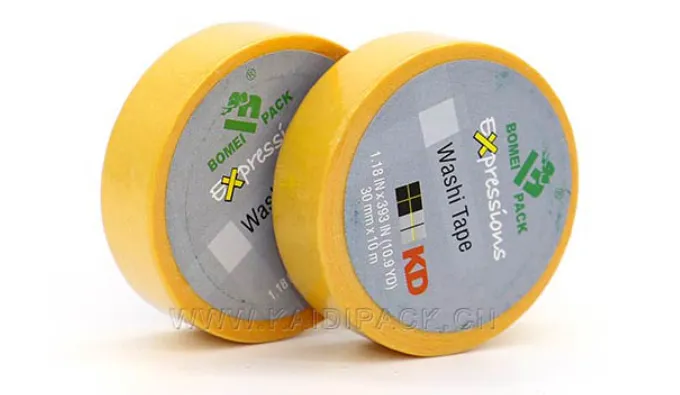
Another important indicator is color consistency between the full roll and an individual strip. High-quality tape provides good coverage, so its color should not intensify or shift significantly when multiple layers are applied. Noticeable color changes between the roll and layered sections may indicate differences in adhesive coating or coverage performance.
The overall surface appearance is another useful indicator of washi tape quality. When tape is first slit into finished rolls, small air bubbles may appear on the adhesive surface. These typically dissipate after approximately one week.
Tape made with pure, high-quality adhesive should have a smooth, clean surface without visible white spots. In contrast, tape containing impurities often features irregularly scattered white spots. These should be distinguished from ordinary air bubbles, as the spots caused by impurities will not disappear when pressed.
Identifying high-quality washi tape requires attention to adhesive consistency, color and opacity, and surface appearance. A smooth adhesive coating, consistent color performance and a clean surface provide practical reference points when evaluating tape quality for marking and masking applications.