
1. Low-Tack Masking Tape
Adhesive Characteristics: Weak initial tack, easy to tear and peel, leaves no residue.
Suitable Scenarios: Masking delicate surfaces (e.g., wall paint, furniture paint, electronic product casings), temporary fixing (e.g., paper splicing, DIY decoration positioning)
Core Advantage: Avoids damage to the surface of the object being adhered to, suitable for low-tack scenarios.
2. Medium-Tack Masking Tape
Adhesive Characteristics: Moderate tack, strong adhesion and easy to remove, highly versatile.
Suitable Scenarios: Basic masking in decoration (e.g., door and window frames, baseboard spraying), fixing common materials (e.g., metal parts, plastic parts splicing), handicrafts (e.g., journal decoration, model assembly)
Core Advantage: Balances tack and easy to tear, the most commonly used type.
3. High-Tack Masking Tape
Adhesive Characteristics: Strong initial tack, tight adhesion, tear-resistant and not easy to fall off.
Suitable Scenarios: Heavy-duty masking (e.g., outdoor wall spraying, large equipment painting), bonding to rough surfaces (e.g., cement walls, wood surfaces), long-term fixation (e.g., scenarios requiring more than 7 days of renovation protection)
Core Advantages: High adhesive stability to handle complex surfaces and long-term use
1. Room Temperature Masking Tape (Temperature Resistance -10℃~60℃)
Temperature Resistance Characteristics: Can only be used in normal room temperature environments; prone to peeling and residue at high temperatures.
Suitable Scenarios: Room temperature renovation masking (e.g., non-painted walls), DIY crafts, fixing paper packaging
Precautions: Avoid use in direct sunlight or near heat sources (e.g., radiators, light fixtures)
2. Medium Temperature Masking Tape (Temperature Resistance 60℃~120℃)
Temperature Resistance Characteristics: Can withstand short-term medium temperatures; the adhesive layer does not easily soften or peel off at high temperatures.
Suitable Scenarios: Industrial light spraying (e.g., low-temperature baking paint on metal parts), partial repair of automotive interiors, temporary fixation of electronic components (non-high-temperature operations)
Core Advantages: Wider range of applications than the standard temperature version, suitable for both industrial and civilian scenarios
3. High-Temperature Masking Tape (Temperature Resistance 120℃~260℃)
Temperature Resistance Characteristics: Strong high-temperature resistance; can still be completely peeled off after high-temperature baking, leaving no residue
Suitable Scenarios: Industrial high-temperature spraying (e.g., high-temperature baking paint on automotive shells, enamel finishing on hardware parts), circuit board soldering masking, temporary fixation in ovens (specific food-grade versions)
Material Characteristics: Mostly uses glass fiber reinforced substrate or special adhesive layer; price is higher than standard/medium temperature versions
1. Ordinary Paper Masking Tape
Substrate Characteristics: Pure paper substrate, easy to tear, writable, high cost-performance ratio
Limitations: Not moisture-resistant; easily softens and peels off in humid environments
1. Waterproof Masking Tape: Suitable for general masking and marking in dry environments (e.g., color separation on walls during renovation, package labeling).
2. Waterproof Masking Tape: Features: The substrate is waterproofed (e.g., waxed, film-coated), moisture-resistant and waterproof.
Suitable Scenarios: Outdoor renovation masking (e.g., exterior wall repair in rainy weather), kitchen/bathroom tile installation and positioning, packaging in damp environments (e.g., marking seafood transport packages).
3. Flame-Retardant Masking Tape: Features: The substrate contains flame retardants, making it difficult to ignite when exposed to open flames, meeting fire safety standards.
Suitable Scenarios: Electrical equipment masking (e.g., wire joint insulation, circuit board coating), public place renovation (e.g., wall treatment in shopping malls and hospitals), fixing in high-temperature work areas.
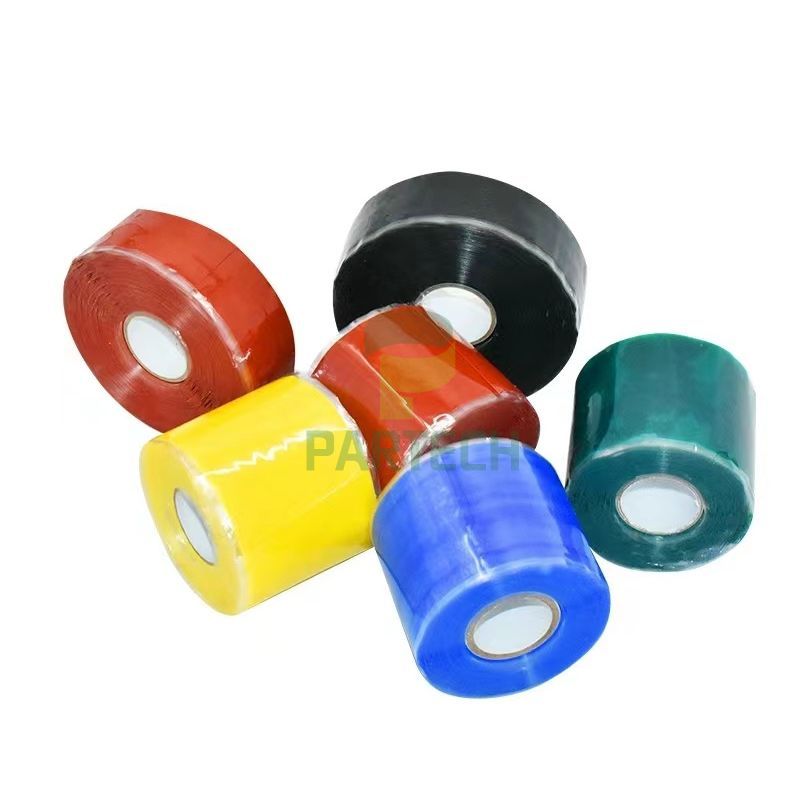
4. Colored Masking Tape: Features: The substrate is colored (e.g., red, yellow, blue, black), combining masking and marking functions.
Suitable Scenarios: Multi-area masking (e.g., color separation of different wall colors during renovation), workshop workstation marking, DIY creative decoration (e.g., journaling, model color matching).