
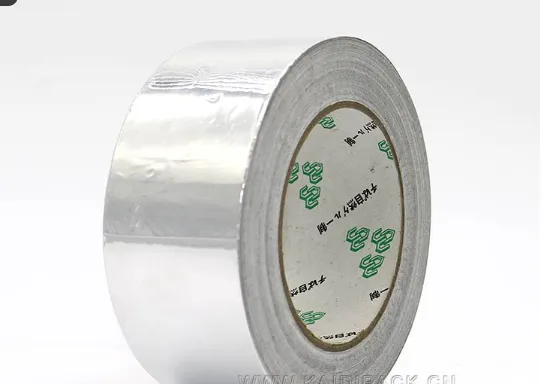
Aluminum foil tape possesses electromagnetic wave isolation properties and is widely used in industries such as refrigeration, air conditioning, automotive, petrochemicals, bridge construction, hospitality, and electronics. The shielding principles of aluminum foil tape are outlined below:
1. Reflection loss caused by impedance mismatch at the surface of the shielding material.
2. Transmission loss (or absorption loss) resulting from the absorption of electromagnetic energy as the wave propagates through the shielding material.
3. Multiple reflection loss caused by repeated reflections of electromagnetic waves between the inner surfaces of the shielding material. These points highlight the three fundamental factors influencing a material's shielding effectiveness: electrical conductivity, magnetic permeability, and material thickness. These factors also represent key areas of focus and potential breakthroughs in the research of shielding materials.
Regarding the structure of an electromagnetic shield, shielding effectiveness also depends on factors such as structural design, shape, and airtightness. Specific applications require consideration of variables such as the frequency of the electromagnetic waves being shielded and the nature of the field source.
As aluminum foil is a metal, it is inherently electrically conductive. Based on the shielding principles described above, it is evident why this material is suitable for electromagnetic shielding applications within a wide range of electronic products—including transformers, mobile phones, computers, PDAs, POP displays, LED monitors, laptops, and photocopiers.