
Double-sided adhesive tape is a roll-form adhesive product manufactured by uniformly coating an elastomer-based or resin-based pressure-sensitive adhesive onto a substrate made of paper, cloth, or plastic film. It consists of three primary components: the substrate, the adhesive, and the release paper (or film).
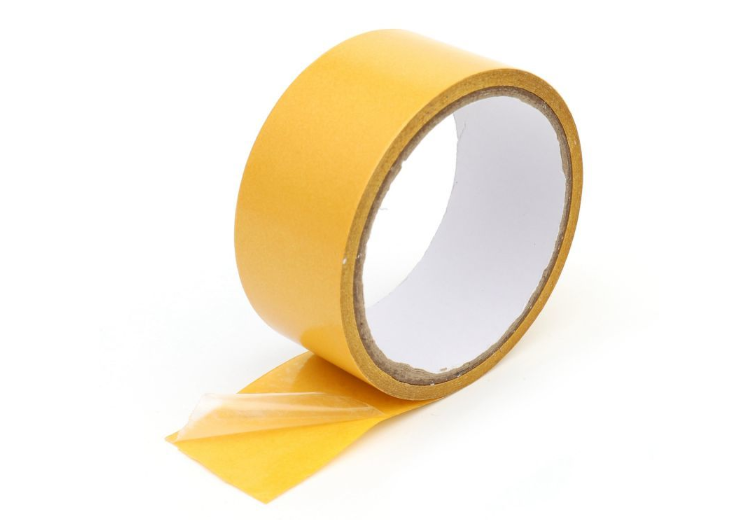
Common issues encountered during the die-cutting of double-sided tape include rough or "fuzzy" cut edges. The root cause of these problems lies in the die-cutting process itself: during the compression phase, the cutting blades on the die-cutting plate exert a certain tensile force on the tape. If the tape is not completely severed before this tension is applied, it may tear apart rather than being cleanly cut, resulting in a fuzzy or frayed edge.
To resolve the issue of fuzzy edges, the first step is to select the appropriate type of die-cutting blade based on the specific characteristics of the tape being used. The texture and height of the blade's cutting edge directly impact both the quality of the die-cut product and the service life of the blade itself.
To prevent fuzzing, it is generally preferable to use a blade with a straight-grain edge rather than one with a cross-grain edge. The following three operational points should be observed:
1. When initially bonding the double-sided tape to the sub-frame or reinforcing ribs, strictly avoid touching the exposed adhesive (after removing the release liner) or the cleaned bonding surfaces with your hands or any other objects.
2. Clean the bonding surfaces—specifically the contact points between the composite panel, sub-frame, reinforcing ribs, and the double-sided tape—using a 1:1 mixture of isopropyl alcohol and water, or xylene.
3. Insert the sub-frame (with the double-sided tape already attached) into the composite panel assembly. Gently tap the sub-frame with your hand or a rubber mallet to ensure the bent edges of the composite panel seat securely into the grooves of the sub-frame. This ensures a firm bond between the tape and the composite panel, resulting in a gap of less than 0.4 mm at the folded edge seams.
During the slitting of double-sided adhesive tape, if the slitting blades are improperly adjusted or lack sufficient sharpness, they may cause micro-cracks to form in the tape's face paper or backing paper. Subsequently, fibers pulled loose from these cracks may become entrapped and bonded within the adhesive layer. Cracks may occur continuously or randomly; they may appear on just one edge of a roll of double-sided tape or on both edges simultaneously. Therefore, before processing a roll of double-sided tape on a machine, it is essential to carefully inspect both the release liner (backing paper) and the face stock for any minute cracks. Subsequently, take a sample section that has undergone this initial check, peel away the release liner, and inspect both the face stock and the liner once more for cracks; this is necessary because cracks are sometimes so minute that they can only be detected after the liner and face stock have been separated.
Ensuring that the edges of a roll of double-sided tape are smooth and undamaged is fundamental to guaranteeing the quality of the final product. Consequently, prior to processing, one must carefully inspect the slit edges of the tape roll to check for burrs or damage resulting from improper storage or transport. Furthermore, it is advisable to unroll the tape for 4 to 5 turns to conduct a thorough inspection of its slit edges.
Checking for Edge Adhesion and Silicone Coating Defects on the Release Liner
Edge adhesion—where the edges of the face stock and liner stick together—or areas on the release liner where the silicone coating has been omitted (silicone skips) can both lead to the face stock tearing during the waste matrix stripping process, thereby disrupting normal production. Therefore, before processing, take a sample strip of the self-adhesive material approximately one meter in length and manually peel it apart to check for any sections—whether at the edges or elsewhere—that do not peel away smoothly and consistently. Typically, edge adhesion issues occur within a specific slit roll derived from a larger master roll of coated material, and they are generally confined to the outermost 7 to 10 meters of that specific roll. Consequently, if you encounter a slit roll of double-sided tape exhibiting edge adhesion, do not immediately assume that the entire roll is defective.
Additionally, it should be noted that peeling away a lightweight face stock (e.g., 60 g/m² or 80 g/m²) requires greater force than peeling a heavier face stock; the lighter the face stock, the "tighter" or more resistant it will feel during the peeling process. Precisely because of this, there are instances where, despite a customer's specific requirements for a die-cut shape, the particular double-sided tape they have selected cannot be successfully processed at standard production speeds. This concludes our summary for today regarding the issues encountered during the die-cutting of double-sided tape, along with their corresponding solutions. Of course, there remains a wealth of knowledge to explore regarding double-sided tape—particularly concerning its various types and characteristics.