
The large-scale application of printed tape in the logistics industry is a double-edged sword. While bringing efficiency and convenience to logistics operations, it also leaves complex environmental marks, impacting resource consumption, pollution emissions, and ecological cycles. We are well aware of the environmental burden of traditional printing and are therefore committed to environmental innovation, exploring new paths for resource conservation and environmental friendliness, striving to reduce the ecological impact of printed tape.
Printed tape is widely used in the packaging industry both domestically and internationally. It not only fulfills the functions of sealing cartons and protecting goods, but also serves various other functions such as decoration, advertising, labeling, and security sealing to meet the needs of different customers and industries. However, the large-scale application of printed tape in the logistics industry is a double-edged sword. While bringing efficiency and convenience to logistics operations, it also leaves complex environmental marks, impacting resource consumption, pollution emissions, and ecological cycles. In our view, both traditional printing and environmental innovation bring different impacts.
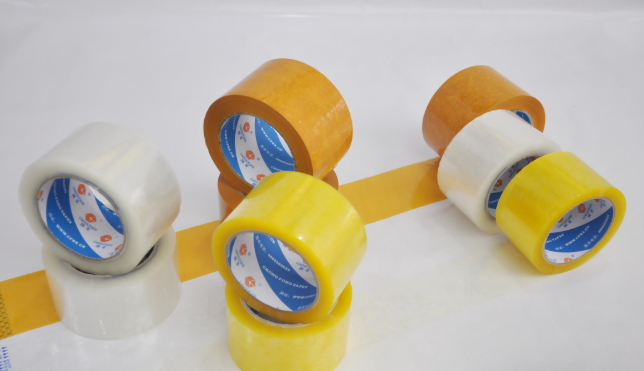
Traditional printed tapes primarily use BOPP (biaxially oriented polypropylene) film as their base material. This material originates from petrochemical products, and its production process itself consumes a large amount of non-renewable resources. The logistics industry uses an enormous amount of tape; according to relevant data, the tape consumed annually by my country's express delivery industry alone could circle the Earth several times. After fulfilling its function of sealing boxes, most of this tape becomes household waste.
Because BOPP film is difficult to degrade in the natural environment, requiring hundreds of years to completely decompose, large amounts of waste tape end up in landfills, occupying valuable land resources and potentially polluting soil and groundwater. Furthermore, the inks and adhesives used in printed tapes contain volatile organic compounds (VOCs). During production and use, these substances evaporate into the air, affecting air quality and potentially harming human health. In the tape recycling process, the special material and the presence of printed patterns and adhesives increase the difficulty and cost of recycling, resulting in most waste tape failing to enter formal recycling channels and becoming mixed with household waste, further exacerbating environmental pressure.
As environmental protection concepts become more deeply integrated into the logistics industry, printed tape is undergoing a positive transformation in terms of its environmental impact. The emergence of biodegradable printed tape is a significant breakthrough. Tape made from renewable resources such as corn starch and cellulose can rapidly degrade in the natural environment, reducing long-term pollution to soil and water bodies. For example, some biodegradable tapes can completely decompose into harmless substances within 3-6 months under composting conditions, significantly reducing environmental residues from waste.